The Many Uses Light Weight Aluminum Castings: A Comprehensive Guide for Industry Professionals
Aluminum spreadings play a necessary role across numerous sectors, thanks to their special homes. These lightweight and sturdy elements are crucial in vehicle and aerospace applications. Understanding their advantages and the production procedures entailed can greatly influence efficiency and efficiency. As innovation developments, new innovations remain to arise. Market professionals must consider these aspects to make educated selections. The ramifications of these developments deserve discovering additionally.
Advantages of Light Weight Aluminum Castings in Different Industries
Light weight aluminum castings provide numerous advantages throughout various markets, making them a recommended choice for numerous applications. One of the key benefits is their lightweight nature, which adds to general energy efficiency in transportation and machinery. This decreased weight also enhances convenience of handling and installation, resulting in lower labor prices.
Additionally, aluminum spreadings exhibit superb rust resistance, prolonging the life-span of elements in rough settings. Their electric and thermal conductivity enables for effective heat dissipation and reliable electrical applications.
In addition, aluminum can be conveniently alloyed and manipulated, enabling the production of intricate shapes and styles that meet certain design requirements. This convenience supports innovation in industries such as automotive, aerospace, and customer items.
The recyclability of aluminum straightens with sustainable methods, making it an environmentally friendly choice for contemporary manufacturing. In general, the advantages of aluminum castings place them as necessary products in different markets.
Secret Manufacturing Processes for Light Weight Aluminum Castings
A range of making procedures are used to produce aluminum spreadings, each customized to fulfill details application needs and manufacturing volumes. Amongst one of the most usual techniques are sand casting, pass away spreading, and investment spreading.

Financial investment spreading, also understood as lost-wax casting, gives phenomenal surface finishes and elaborate details, usually used for smaller, accuracy components. Additionally, gravity casting makes use of the pressure of gravity to fill up mold and mildews, ideal for bigger castings where accuracy is much less important. Each process has its advantages, accommodating varied industrial demands while maximizing efficiency and top quality in light weight aluminum spreading production.
Applications of Light Weight Aluminum Castings in Automotive and Aerospace
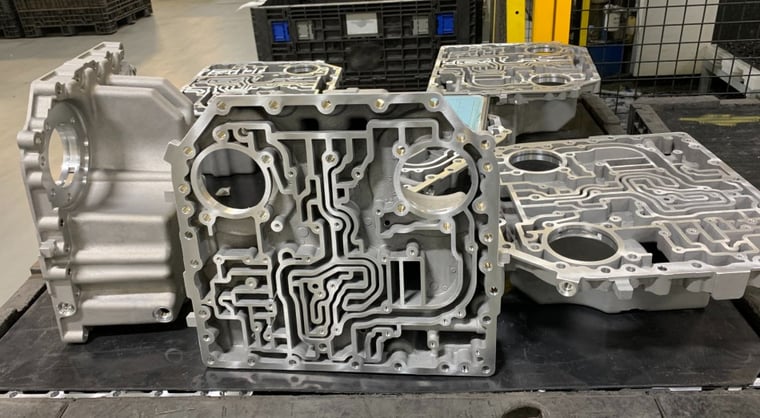
In numerous applications within the vehicle and aerospace markets, light weight aluminum spreadings play a crucial role due to their lightweight buildings and excellent strength-to-weight ratio. In the automotive field, elements such as engine blocks, transmission cases, and wheel rims are commonly produced utilizing light weight aluminum castings. These components take advantage of lowered weight, causing boosted gas effectiveness and boosted efficiency.
In aerospace, light weight aluminum spreadings are necessary for architectural parts, including aircraft frames, touchdown gear, and engine real estates. The material's resistance to deterioration and ability to endure high temperature levels make it perfect for these demanding applications. Furthermore, aluminum castings facilitate complex geometries, enabling the style of detailed components that contribute to overall airplane effectiveness.
Developments and Improvements in Light Weight Aluminum Spreading Technology
As sectors remain to progress, developments in aluminum spreading innovation are driving significant renovations in performance and efficiency. Advanced strategies such as 3D printing and spreading simulation software program have changed standard methods, permitting for a lot more accurate designs and decreased waste. These innovations allow suppliers to develop complex geometries that were previously unattainable, boosting the adaptability of light weight aluminum castings.
In addition, the development of new alloy structures and therapy techniques has actually boosted mechanical properties, here are the findings making spreadings lighter yet stronger. Automated processes are additionally being incorporated, decreasing human error and raising manufacturing speed.
Ideal Practices for Using and choosing Light weight aluminum Castings
When making use of and picking light weight aluminum spreadings, careful consideration of details standards can substantially influence the last item's efficiency and long life. Market experts should examine the specific application demands, including load-bearing abilities, deterioration resistance, and thermal conductivity. Selecting the proper alloy is essential, as various alloys provide varying staminas and features.
Additionally, recognizing the spreading process-- whether sand spreading, pass away casting, or financial investment spreading-- will certainly affect the end product's top quality and cost-effectiveness. Quality assurance procedures, such as non-destructive testing and dimensional assessments, are crucial to guarantee that the spreadings satisfy industry standards.
Furthermore, proper handling and storage space of aluminum spreadings can stop damages, guaranteeing peak performance. Teaming up with credible providers who prioritize high quality control can enhance the integrity of the finished components. By adhering to these finest methods, sector experts can maximize the advantages of light weight aluminum castings in their applications.
Frequently Asked Concerns
What Are the Environmental Effects of Aluminum Spreading Production?
Light weight aluminum spreading manufacturing can lead to substantial environmental influences, including greenhouse gas exhausts, energy consumption, and source exhaustion. In addition, incorrect waste administration might lead to dirt and water contamination, impacting regional ecosystems and areas.
How Do Aluminum Castings Contrast to Other Metal Spreadings?
Light weight aluminum castings are lighter and corrosion-resistant contrasted to various other steel spreadings like iron Recommended Site or steel. They provide exceptional thermal and electrical conductivity, making them excellent for applications where weight and longevity are vital variables.
What Is the Cost Distinction Between Aluminum and Various Other Materials?
The price of light weight aluminum castings typically varies from moderate to high, usually a lot more budget friendly than stainless-steel but more expensive than some plastic alternatives. Aluminum Foundry. Factors such as production material, quantity, and intricacy specs greatly affect general rates
Can Light Weight Aluminum Castings Be Recycled?
Light weight aluminum castings can undoubtedly be reused. This procedure considerably minimizes power usage and ecological effect compared to generating new aluminum, making recycling an essential practice in promoting sustainability and resource preservation within different markets.
What Safety and security Actions Should Be Taken During Light Weight Aluminum Casting Processes?
During aluminum casting procedures, essential safety and security measures consist of using protective equipment, guaranteeing appropriate air flow, making use of heat-resistant tools, preserving equipment, and complying with security methods to avoid exposure to unsafe products and minimize the threat of mishaps. (Aluminum Foundry)
Sand casting involves developing a try this mold and mildew from sand, enabling for complex forms and huge spreadings. Investment casting, also recognized as lost-wax spreading, offers extraordinary surface coatings and detailed information, typically utilized for smaller, accuracy elements. Additionally, gravity casting utilizes the pressure of gravity to fill mold and mildews, appropriate for bigger castings where accuracy is less essential. In addition, comprehending the spreading process-- whether sand casting, pass away casting, or investment casting-- will certainly affect the final product's high quality and cost-effectiveness. Aluminum castings are lighter and corrosion-resistant compared to various other metal spreadings like iron or steel.